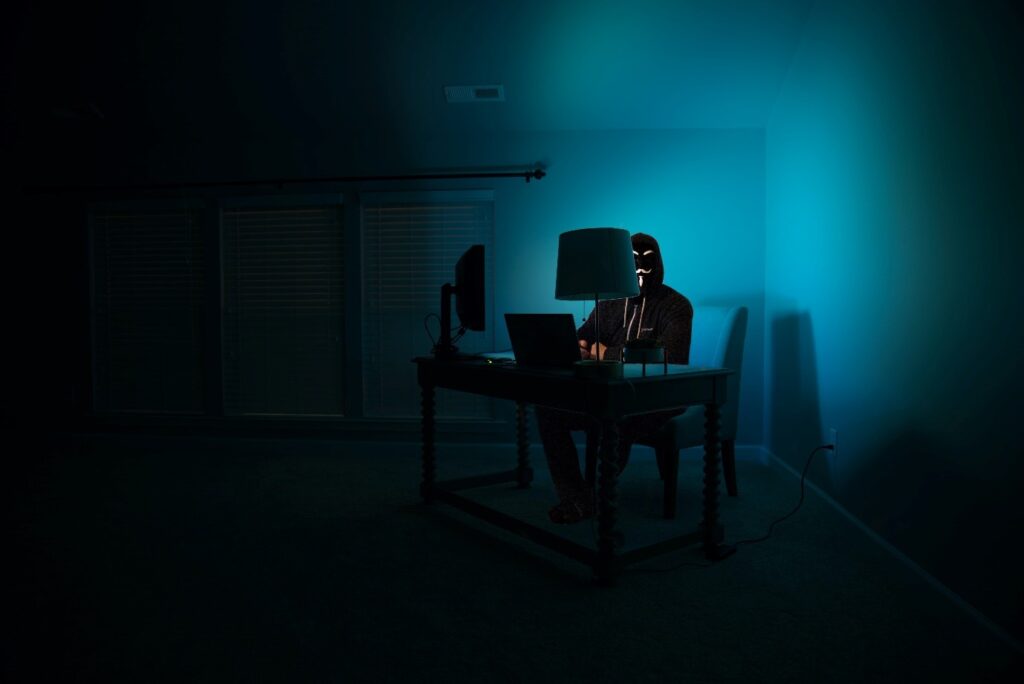
The dark web is associated with a criminal underbelly of the internet. It remains mysterious to most, but knowledge can help you understand exactly what is out there and know what to do about the threats of the dark web.
What you need to know:
- The dark web is a hidden part of the internet that you can’t reach with normal browsers and search engines.
- It contains both legal content (for privacy and free speech) and many illegal markets and services.
- Visiting the dark web isn’t illegal by itself, but many activities there are against the law and very risky.
- Your personal data can end up on the dark web through data breaches even if you never visit it yourself.
- You can reduce your risk with strong security tools that include monitoring, and careful online habits that preserve your security.
- Only access the dark web if you have a legitimate reason and follow strict safety rules when you do.
Dark web – definition
The dark web is a hidden part of the internet not indexed by regular search engines, accessed through specialized browsers like Tor. It hosts both legal and illegal activities, offering anonymity but also posing risks like scams and illicit content.
What is the dark web, deep web and surface web?
The Internet is sizable with millions of web pages, databases, and servers all running 24 hours a day. But the so-called “visible” Internet (aka surface web or open web) — sites that can be found using search engines like Google and Yahoo — is just the tip of the iceberg.
There are several terms surrounding the non-visible Web, but it’s worth knowing how they differ if you’re planning to browse off the beaten path.
The surface web or open web
The open web, or surface web, is the “visible” surface layer. If we continue to visualize the entire web like an iceberg, the open web would be the top portion that’s above the water. From a statistical standpoint, this collective of websites and data makes up under 5% of the total internet.
All commonly public-facing websites accessed via traditional browsers like Google Chrome, Microsoft Edge, and Firefox are contained here. Websites are usually labeled with registry operators like “.com” and “.org” and can be easily located with popular search engines.
Locating surface web websites is possible because search engines can index the web via visible links (a process called “crawling” due to the search engine traveling the web like a spider).
The deep web
The deep web rests below the surface and accounts for approximately 90% of all websites. This would be the part of an iceberg beneath the water, much larger than the surface web. In fact, this hidden web is so large that it’s impossible to discover exactly how many pages or websites are active at any one time.
Big search engines tend to index websites close to the proverbial surface. Everything else, from academic journals to private databases and more illicit content, is out of reach. This deep web also includes the portion that we know as the dark web.
While many news outlets use “deep web” and “dark web” interchangeably, much of the deep portion is perfectly legal and safe. Some of the largest parts of the deep web include:
- Databases: both public and privately protected file collections that are not connected to other areas of the web, only to be searched within the database itself.
- Intranets: internal networks for enterprises, governments, and educational facilities used to communicate and control aspects privately within their organizations.
The chances are you already use the deep web every day. Deep web sites may be concealed behind passwords or other security walls, while others simply tell search engines to not “crawl” them. Without visible links, these pages are more hidden for various reasons.
These deep web pages usually pose no threat to your computer or safety. They include private pages such as:
- Financial accounts like banking and retirement
- Email and social messaging accounts
- Private enterprise databases
- HIPAA sensitive information like medical documentation
- Legal files
At the dark end of the web, you’ll find the most hazardous content and activity. Tor websites are located at this far end of the deep web, which are deemed the “dark web” and are only accessible by an anonymous browser.
Deep web safety is more relevant to the average internet user than dark web safety, as you could end up in dangerous areas by accident: many portions of the deep web can still be accessed in normal internet browsers.
The dark web
The dark web refers to sites that are not indexed and only accessible via specialized web browsers. Significantly smaller than the tiny surface web, the dark web is considered a part of the deep web. Using our ocean and iceberg analogy, the dark web would be the bottom tip of the submerged iceberg.
The dark web, however, is a very concealed portion of the deep web that few will ever interact with or even see. In other words, the deep web covers everything under the surface that’s still accessible with the right software, including the dark web.
Breaking down the construction of the dark web reveals a few key layers that make it an anonymous haven:
- No webpage indexing by surface web search engines. Google and other popular search tools cannot discover or display results for pages within the dark web.
- “Virtual traffic tunnels” via a randomized network infrastructure.
- Inaccessible by traditional browsers due to its unique registry operator. Also, it’s further hidden by various network security measures like firewalls and encryption.
When it comes to dark web safety, the deep web dangers are very different from dark web dangers. Illegal cyber activity cannot necessarily be stumbled upon easily but tends to be much more extreme and threatening if you do seek it out. Before we unpack the dark web’s threats, let’s explore how and why users access these sites.
What is on the dark web?
The dark web hosts both legal and illegal activities, offering anonymity but also posing risks like scams and illicit content. It can be seen as a space for people who want to be anonymous. This could be for scamming people or trying to partake in illegal marketplaces and forums.
Overall, the reputation of the dark web has often been linked to criminal intent or illegal content, and “trading” sites where users can purchase the aforementioned illicit goods or services.
What is the dark web used for?
People often associate the dark web with criminal activity, but there are legitimate uses.
The dark web has attracted many parties who would otherwise be endangered by revealing their identities online. Abuse and persecution victims, whistleblowers, and political dissidents have been frequent users of these hidden sites. These benefits can be easily extended to those that want to act outside of the constraints of laws in other explicitly illegal ways. This brings a raft of precautions that need to be taken.
We’ve already discussed many of the nefarious uses. Hidden marketplaces may sell stolen data or illegal goods. They may also sell malware or hacking tools. Some forums trade in leaked credentials or personal information taken from data breaches. Scams are common as well, with fake services designed to steal money or identities.
Protect your data from the Dark Web
Stay ahead of identity theft and hidden threats with Kaspersky Premium. Monitor exposed data, block malware, and keep your personal information secure.Try Premium for Free
What does the dark web look like?
Most dark web sites look plain compared to regular websites. Pages often load with basic text and minimal images because many dark web services focus on anonymity and speed rather than design. Some pages may remind people of old internet forums or stripped-down message boards with a layout that feels more functional than polished.
Dark web sites use .onion URLs, which are long strings of random letters and numbers. These addresses don’t follow normal naming rules like “.com” or “.org,” and you cannot guess them or search for them in Google. You must know the exact address or find it listed somewhere else.
Because the dark web is not indexed, people often rely on directories and link lists or a specific dark web search engine to navigate. These directories are simple pages that collect .onion links into categories. They have a high level of link-rot. This means many links stop working or disappear without warning. As a result, browsing the dark web is fraught with danger.
A typical dark web page may include:
- A plain background with minimal styling
- Basic text sections and simple navigation links
- Few or no images
- A focus on function, such as a login box, message area, or product list
- This simplicity is intentional. It reduces loading time over the Tor network and helps site operators stay hidden.
Who created the dark web?
Many people trace the creation of the dark web as we know it to the .onion project and Tor browser.
Tor (“The Onion Routing” project) network browser provides users access to visit websites with the “.onion” registry operator. This browser is a service originally developed in the latter part of the 1990s by the United States Naval Research Laboratory.
Increasing technology and free dark web browser software like Tor now makes it possible for anyone to dive dark if they’re interested. It is no longer solely the domain of hardened criminals and law enforcement.
Is the dark web illegal?
Simply put, the dark web itself is not illegal. In fact, some uses are perfectly legal and support the value of the “dark web.” On the dark web, users can seek out three clear benefits from its use:
- User anonymity
- Virtually untraceable services and sites
- Ability to take illegal actions for both users and providers
The dark web’s legality is based on how you as a user engage with it. You might fall to the wayside of legal lines for many reasons that are important for the protection of freedom. Others may act in ways that are illegal for the protection and safety of others.
On the software end, the use of Tor and other anonymized browsers is not strictly illegal. In fact, these supposed “dark web” browsers are not tethered exclusively to this portion of the internet. Many users now leverage Tor to browse both the public Internet and the deeper parts of the web privately.
The privacy offered by the Tor browser is important. Corporations and governing bodies alike currently participate in unauthorized surveillance of online activity. Some simply don’t want government agencies or even Internet Service Providers (ISPs) to know what they’re looking at online.
Users in countries with strict access and user laws are often prevented from accessing even public sites unless they use Tor clients and virtual private networks (VPNs).
However, you can still take illegal actions within Tor that could incriminate you regardless of the browser’s legality. Some people use Tor to pirate copyrighted content from the deep web, share illegal pornography or engage in cyber terrorism.
On the network end, the dark web is a bit more of a grey area. The use of the dark web usually means that you are attempting to engage in activity that you could not otherwise carry out in the public eye. This could just be because you value privacy in the activity.
Anonymity also comes with a dark side since criminals and malicious hackers also prefer to operate in the shadows. For example, cyberattacks and trafficking are activities that the participants know will be incriminating. They take these actions to the dark web to hide for this reason.
Ultimately, simply browsing these spaces is not illegal but can be an issue for you. Unsavory activity does live in many parts of the dark web. It can expose you to unnecessary risks if you are not careful or an advanced, computer savvy user aware of its threats.
Hi, this is a comment.
To get started with moderating, editing, and deleting comments, please visit the Comments screen in the dashboard.
Commenter avatars come from Gravatar.